Bosnia and Herzegovina possesses exceptional river wealth that simultaneously represents one of the greatest natural resources for tourism development and local economies. Rivers like the Una and Neretva have been positioning themselves as tourist brands for years, but are simultaneously facing infrastructure pressures, unplanned construction, and insufficiently effective wastewater management.
Illegal construction, wastewater, and the concreting of riverbanks are changing the face of one of Europe's last wild rivers, while tourism survives precisely thanks to its untouched nature.
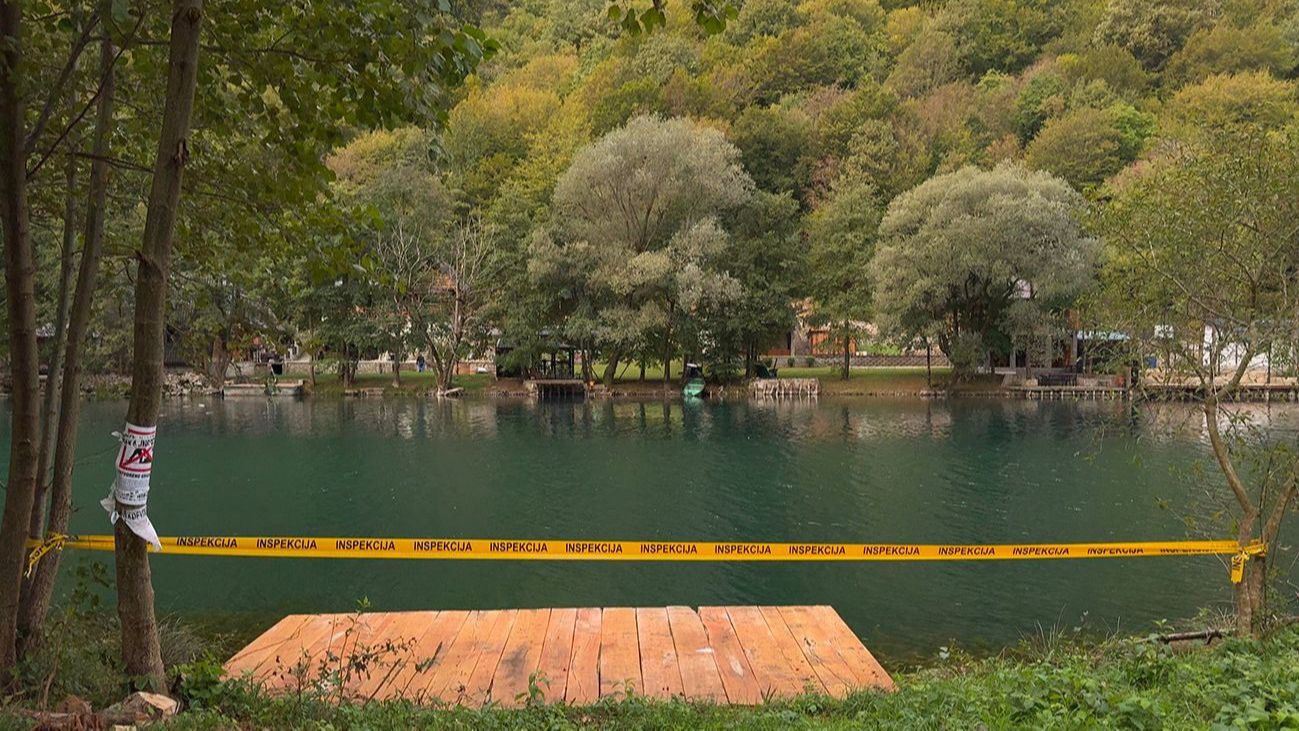
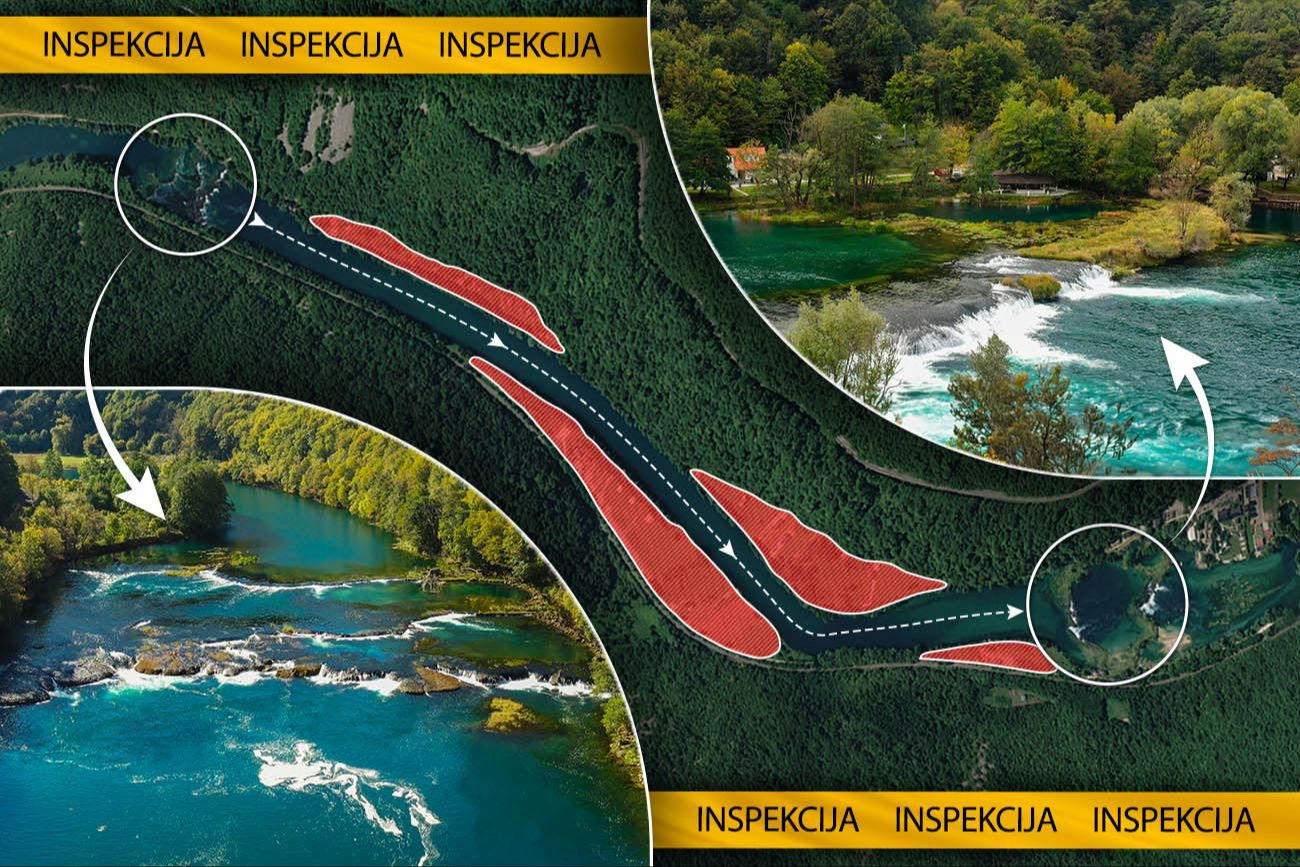
Data obtained by journalists from the Center for Investigative Reporting (CIN) show that systematic illegal construction has been taking place for years within the core of Una National Park, without serious reaction from the institutions that should protect this area. In the zones of Lohovo and Račić, which represent areas of exceptional natural values, almost 50 vacation cottages and auxiliary structures have been built over just one and a half kilometers of river course, along with dozens of concrete beaches, retaining walls, and docks.
CIN-ova infografika . Foto: Željko Todorović CIN
CIN-ova infografika. Foto: Željko Todorović CIN
Suffocating in concrete
The problem did not emerge overnight. According to CIN's investigation, wild construction has been ongoing for almost two decades, and during that time the competent authorities either failed or were unwilling to enforce the laws that should protect the river and its ecosystem.
- If there had been real will, every institution could have exerted pressure on the other and found a solution. Instead, the state apparatus retreated before citizens who were breaking the law - states Milena Mitrović, a CIN journalist.
Although the city building inspection is formally responsible for demolishing illegal structures, data obtained by CIN from the City of Bihać's Inspection Services show that from 2010 to mid-2025, almost no attempts were made to issue demolition orders. Procedural problems, the lack of companies willing to demolish objects, and the lack of police support were cited as reasons. The concrete consequences of such construction on the flow of the Una and the entire ecosystem affect, above all, the plant and animal world.
- To build a structure, the forest must first be cleared, which itself creates the risk of flooding, which has already occurred in this area, which is naturally a flood zone. Additionally, since the plots are narrow, some owners have dumped stones, thereby narrowing the flow of the Una, which again creates a flood hazard. Then, sewage from the cottages and pool water directly pollute the water. Some of the cottages apparently have septic tanks, but it is questionable how they were built. One of our sources said he watched a video on the internet about how to do it and made his own that way. Concrete in contact with water also releases certain chemicals, and we have seen how many concrete beaches and retaining walls there are - said Milena Mitrović, a CIN journalist, to "Dnevni avaz".
On the other hand, the police complicated the provision of assistance to inspectors in the field by adopting bylaws. Institutions shifted responsibility to one another, while cottages along the riverbank continued to spring up. Particularly concerning is the fact that some illegal structures are connected to employees of the very institutions that should protect the National Park.
The consequences of such construction are no longer merely aesthetic problems. They directly affect the flow of the Una, its travertine barriers, plant and animal life, and the safety of populations in flood-prone areas.
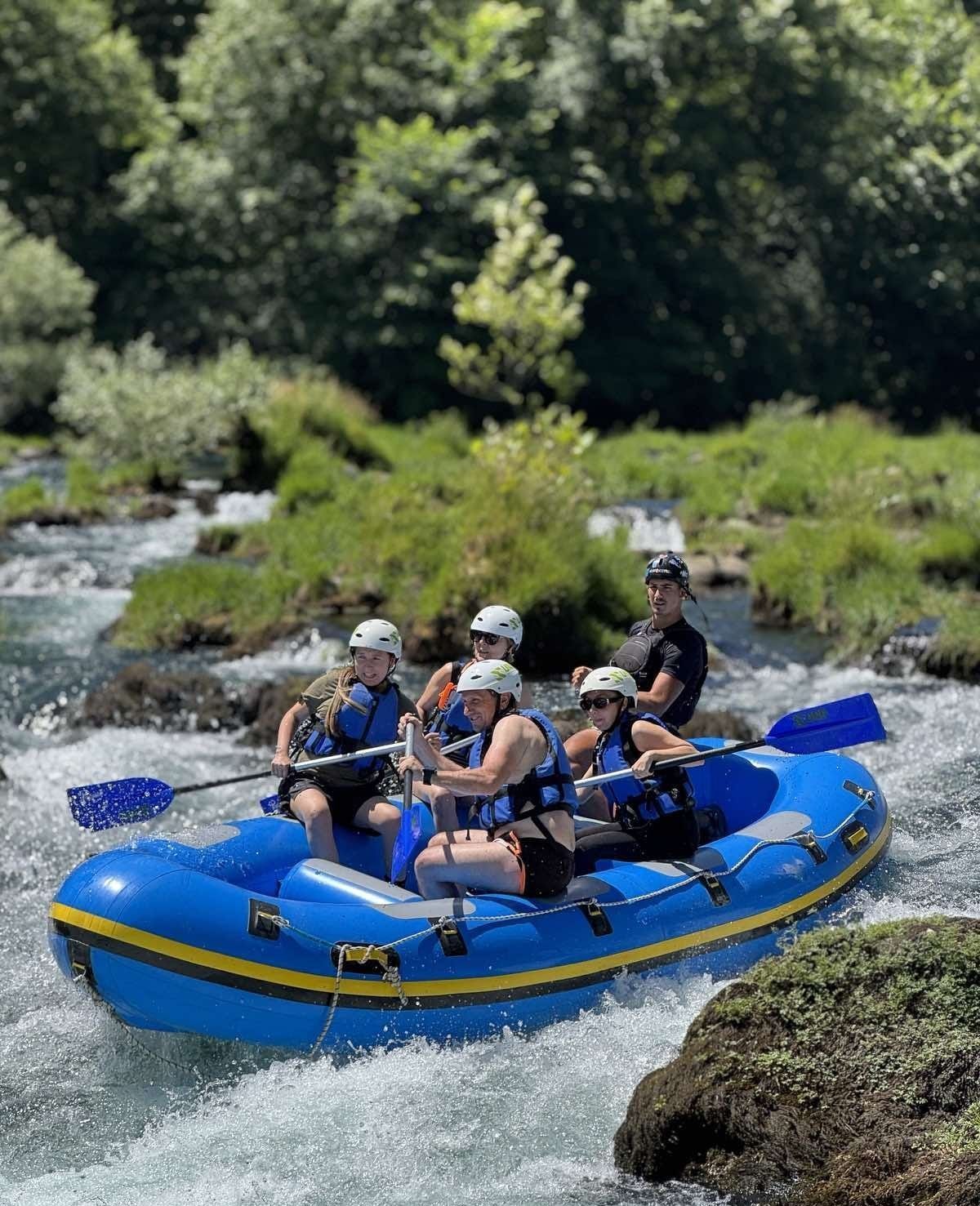
- Tourism, especially rafting, depends on untouched nature and a clean river. The cleanliness of the Una and the nature surrounding it are our greatest asset. Guests come to enjoy nature and peace, and concreting the riverbank creates disappointment and negative reviews - says Emir Abdihodžić, an Una rafting organizer.
Rafting sezona bilježi porast broja turista . Ustupljena fotografija
Rafting sezona bilježi porast broja turista. Ustupljena fotografija
Source of tourism
To build a cottage right on the riverbank, the forest must first be cleared. This reduces natural protection from torrential waters and soil erosion. Since the plots are narrow, some owners have dumped stones and concreted sections of the riverbank, thereby narrowing the natural flow of the river. Precisely such interventions increase the danger of the Una overflowing during high water levels.
- We ourselves have witnessed that floods and extremely high water levels have become increasingly frequent in recent times. Large amounts of garbage and riverbank concreting further worsen the situation - says Emir Abdihodžić, an Una rafting organizer who spends most of his time on the river.
Sewage from cottages, pool water, and improvised septic tanks further endanger water quality. A CIN source noted that some owners built septic tanks themselves, following instructions found on the internet, without any professional supervision. Concrete in direct contact with water over time releases chemical compounds, and mass concreting of riverbanks permanently changes the natural character of the river for which the Una is recognized.
- The Una riverbank should be green, not gray and full of concrete - warns Abdihodžić.
The paradox of the Una is that the local economy increasingly depends on precisely what is being simultaneously destroyed. Rafting tourism has shown growth in recent years, and interest from foreign and domestic guests in staying on the Una is greater than ever before.
- I think all rafting agencies will record an increased number of tourists this year. Interest is particularly high starting in May, which marks the beginning of the season - says Abdihodžić.
However, tourists are the quickest to notice changes on the river. Guests who come for untouched nature and emerald waters increasingly encounter concreted riverbanks, private pontoons, and cottages that disrupt the natural ambiance.
- The cleanliness of the Una and the nature surrounding it are our greatest asset. People come here to escape noise and stress. Concreting the riverbank creates disappointment and criticism from visitors - adds Abdihodžić.
He warns that losing the Una's natural character could trigger a domino effect for the entire local economy - fewer tourists means fewer overnight stays, fewer guests in restaurants, and lower income for the local population.
- If we lose what we have, we will also lose the tourist season we have been building for years - he says.
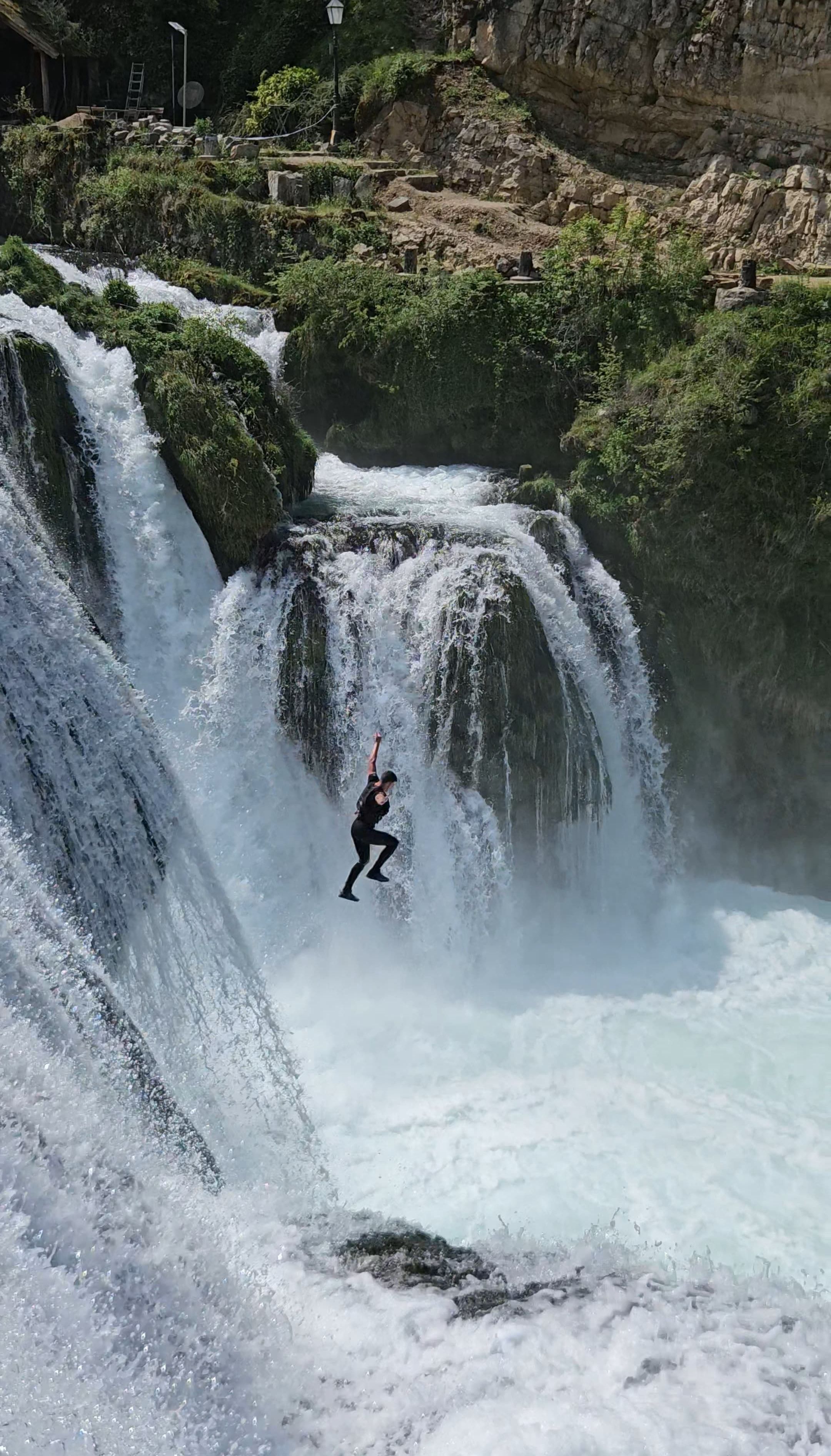
Ključ za očuvanje Une i turističkog potencijala leži u podizanju svijesti. Ustupljena fotografija
Ključ za očuvanje Une i turističkog potencijala leži u podizanju svijesti. Ustupljena fotografija
Without results
Similar problems exist on other rivers in Bosnia and Herzegovina. Marin Bago, president of the "Futura" Consumer Association from Mostar, warns that ineffective institutions and a lack of political will are a common pattern when it comes to environmental protection. Speaking about the wastewater collection and treatment plant project in Mostar, worth nearly 130 million marks, Bago claims that even massive investments have not produced expected results.
- For years it was said that the project was not completed and that money was not justifiably spent. In the end, everything finished without concrete accountability - says Bago.
According to him, much of the wastewater still ends up in the Neretva without adequate treatment, while citizens have been warning about the problem for years.
- People complain that sewage flows directly into the river and that sludge is not treated properly. However, no one takes this seriously. Hercegovina has a very extensive system of groundwater, and citizens have warned for years about a large number of cancer cases, although there is not enough official research on a possible connection between these problems - notes Bago.
He believes that the key problem is the complete absence of political will to enforce laws equally for everyone.
- In Bosnia and Herzegovina we have long witnessed non-transparent and ineffective management. There is no real will to work for the common good - he says.
Ignoring the problem
The case of the Una shows how the degradation of a protected area was tolerated for years without serious institutional reaction. Although there are laws, inspections, national park management offices, and police structures, the system failed to protect the river from the pressure of private interests. While institutions shift responsibility to one another, the consequences remain on the ground: concreted riverbanks, a narrowed river channel, polluted water, and a disrupted ecosystem. At the same time, the natural and "wild" Una represents the foundation for tourism development and the local economy.
- We all must be aware that we have a European gem - says Abdihodžić, adding that change must begin with us. Garbage should be in a bin, not in the water.
For now, however, between the law and reality on the Una stand years of ignoring the problem, unimplemented solutions, and concrete that slowly conquers the banks of one of Bosnia and Herzegovina's most valuable rivers.
- Rafting season shows an increase in the number of tourists, but stable tourism development is threatened by inadequate infrastructure, the relationship between institutions and private companies, and human negligence in environmental conservation. One negative factor can trigger a domino effect and threaten the entire tourist season - adds Abdihodžić.
Institutions without answers
The key to preserving the Una and its tourism potential lies in raising awareness, culture, and love for nature. Riverbanks should remain green, waste should be disposed of in bins, and concrete and wild construction should be prevented so that the river remains Europe's gem and a resource for local communities for future generations.